
Total revenue growth across five years
Case File 01 · Southwest Florida · Joshua Tree Inc.
Growth does not start with more leads.
It starts with becoming the choice, and building the capacity to carry what comes next.
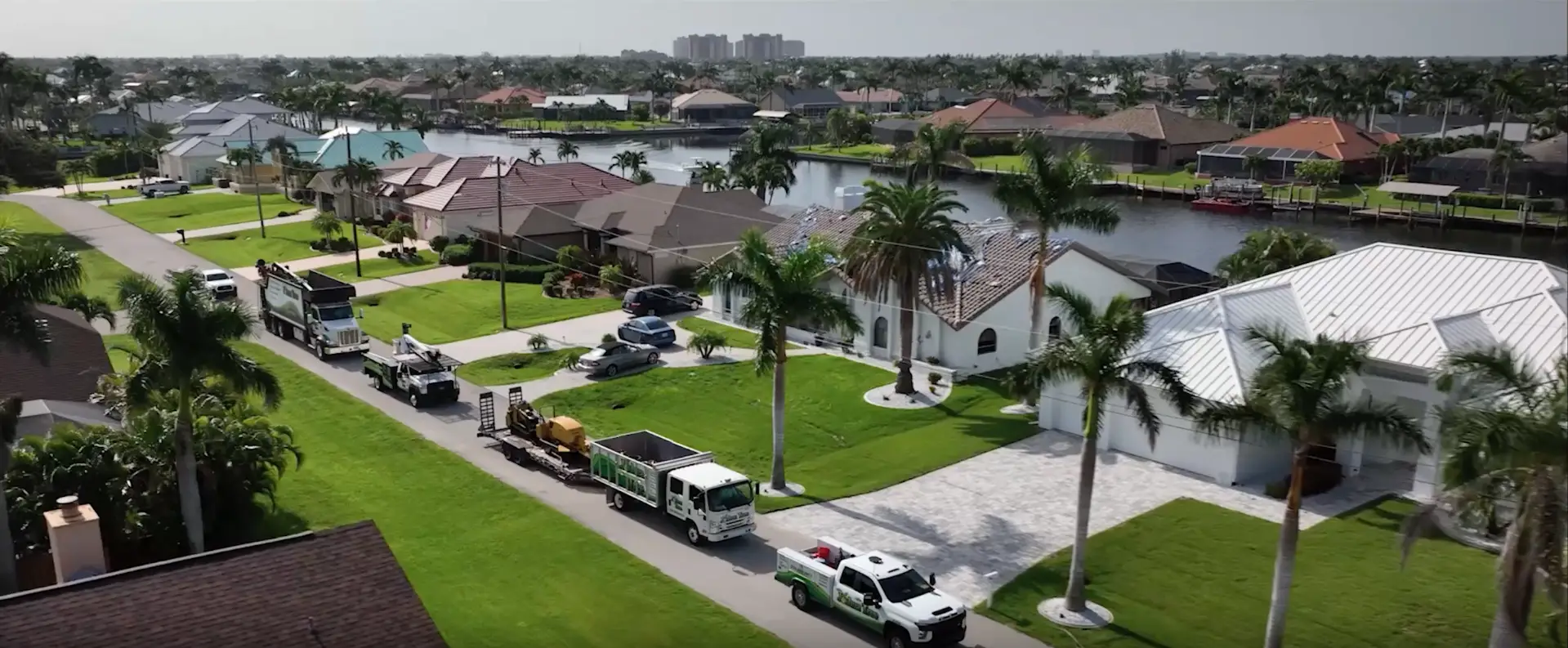
The five-year shape, in one scan
At a glance.
Joshua Tree Inc., a Southwest Florida tree service, grew 384% over five years, not by chasing more leads, but by building brand trust before demand, and the capacity to carry what demand brought in.
Expansion markets grew within a single year of a funded brand-first bet
Quote conversion held, well above the industry's 20–40% range
Marketing spend ran at about half the industry norm relative to revenue
Read the full five-year sequence below.
Where it began
A strong reputation the market couldn't see yet.
Joshua Tree Inc. had built something real. The work was good. The reputation was earned, market by market, job by job.
But growth had flattened. Doing more of the same wasn't going to move the number in a saturating market.
The customer being sold to wasn't abstract. Southwest Florida homeowners weighing tree care worried about hurricane damage, dying or diseased trees, safety, and reliability. They already leaned toward whichever local company had the reviews and reputation to back up a premium price. The opportunity was to become, visibly, the company they already wanted to trust, before price ever entered the conversation.
The insight didn't come from inside the company. It came from Rapture's own background: years of public relations and communications work with donors, where the decision to give is always made well before the act of giving is complete. Layered onto direct field experience in disaster-response communications, where trust has to be established long before anyone picks up a phone, the same principle got applied here.
A customer's decision was never really made in the moment they requested an estimate. It was made earlier, quietly, in whatever built their confidence before that: a review, a familiar face, a name they'd already seen somewhere trustworthy.
So the early work wasn't about generating more leads. It was about winning the decision before the call.
- Testimonials and on-location shoots that made the team’s expertise visible instead of assumed
- A deliberate, aggressive push for reviews
- Consistent name and citation presence everywhere a homeowner might look, on purpose, well before hurricane season made it urgent
- Monthly PR, with real value offered to local news producers, not just placement-chasing
Reviews were never treated as a vanity number. The opportunity to leave feedback was built into nearly every touchpoint.
Pull stat
Review growth accelerated sharply starting in 2021, nearly doubling year over year, a pace that held for several years running.
What mattered more than the count was what happened after a review came in. Joshua, the company's founder and president, treated every response, positive or critical, as real feedback, not a reputation-management exercise.
Pull stat
Average response time to reviews fell from nearly a year to about a week in under twelve months.
That habit reshaped how the whole team thought about the work: not "how do we get a good review," but "how does a trusted guide actually respond when something needs correcting." That instinct would later become the formal blueprint for the entire brand once a customer-experience framework gave it a name.
The content strategy wasn't generic either. It was built around what the local market was actually searching for: mangrove permitting rules, which live oaks legally can't be removed without approval, how to read an arborist report before a real estate closing. Regulatory, hyperlocal, actually useful, the kind of content only a real local expert could produce.
Whatever content was already resonating got identified fast and reinforced with targeted ad spend, compounding growth by putting real budget behind what the audience had already told them mattered.
The goal was simple: make the right choice obvious before the estimate was ever requested.
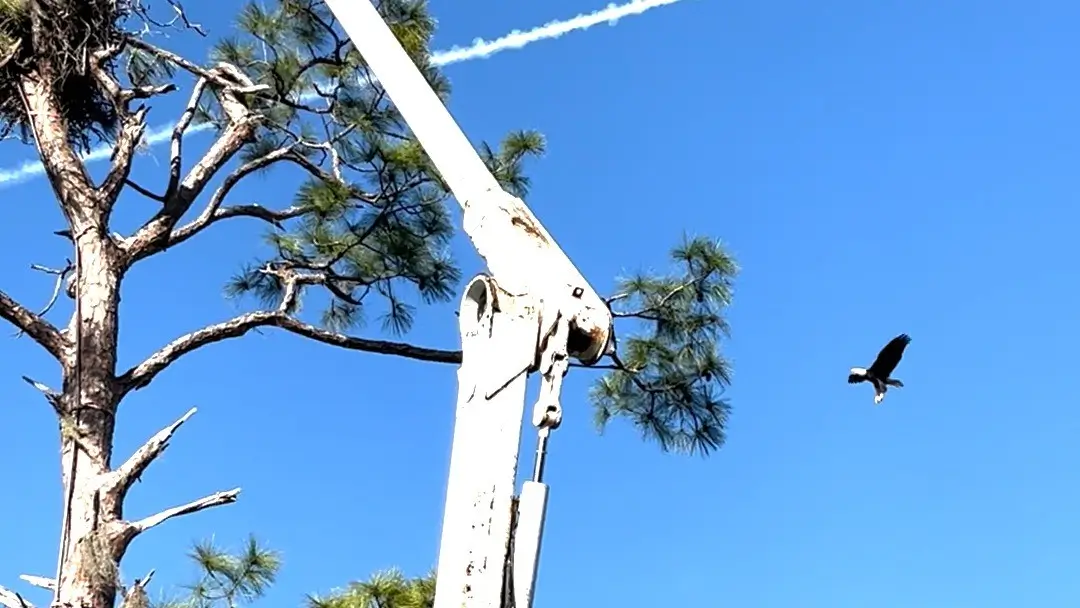
Not all of the trust was manufactured through campaigns. Early in 2022, the team was spotted helping an injured American bald eagle, something they'd quietly done before without ever thinking to publicize it. Local news picked it up, and it became the start of a running pattern: whenever the team was called on again by CROW, the regional wildlife rehabilitation nonprofit, the story went out again, an open standing offer, promoted honestly each time, not a scripted campaign.
The same instinct turned inward. Videos and campaigns began celebrating the team itself: individual accreditations, wins, the people actually doing the work, alongside real training, safety standards, and equipment on display.
The effect went beyond winning customers. Employees, from admin to sales to the field, began saying, in their own words, that they'd joined because the company "looked like the most professional." Joshua Tree Inc. was becoming one of its market's most attractive employers, before that was ever the explicit goal.
The pattern that would define the next five years was already forming: the same standard that made Joshua Tree Inc. visible to customers was also what let it carry more, sooner than expected.
The turning point
Joshua, and the real expansion logic.
None of this happened without the person steering it. As the team and the fleet grew, Joshua stayed closely involved, not just running the company but actively shaping where it went next.
Regular conversations about trajectory turned into something more concrete: the local market was increasingly dominated by this one name, and leads were flattening not from weak demand, but because there was nowhere further to grow inside the same footprint. Expansion stopped being a someday idea and became necessary.
The choice of where wasn't a default "go next-door" decision. Each market was evaluated for real growth opportunity and expected return. The natural next step also happened to be the hardest one: a much larger, far more competitive market, saturated with a tree company on nearly every corner.
The trust-before-the-call playbook had worked at home. The open question was whether it could scale into a market where that same omnipresence would be much harder and more expensive to earn. That question led to the television bet.
Betting on premium, not price
First-in-market, backed by a visible standard.
The instinct, when a local market stalls, is usually to spend harder on the same channels. Joshua Tree Inc. made the opposite call: invest in being unmistakably premium before trying to out-compete on price or volume.
A first-in-market move into television marked the shift, a different claim entirely, backed by a visible standards system: certifications made prominent, a consistent identity across every truck and post, and a community fund that put Joshua Tree Inc.'s name next to real local investment, not just a logo.
That standards system had a heart to it, too. The community fund grew out of two things meeting at once: Joshua's own instinct to give back, and Rapture's work to find it a legitimate, community-oriented structure, rather than let it stay a personal impulse with no real shape.
That meant seeking out real partners chosen for genuine fit rather than visibility: a growing relationship with CROW became one strand of it, then local sports clubs, the Salvation Army, and causes across the community that never made it into a campaign report.
Every job awarded became a small, direct link between a customer and a cause, a way for the community to join in on the giving just by hiring Joshua Tree Inc. to do the work.
Good work, done for its own sake, tends to earn attention on its own. That's what happened here: the impact came first, and the visibility followed it.
The public-relations work matured the same way, from monthly pitches to a more responsive rhythm: chasing timely, seasonal opportunities as they came up. Over time, local stations that had seen the name everywhere started reaching out first.
Recognition started following, too. Beginning in 2023, Joshua Tree Inc. made a deliberate push for local "Best Of" awards across the markets it served, one more visible signal a prospective customer could trust before ever picking up the phone.
Pull stat
Back-to-back local "Best Of" recognition in North Fort Myers, Cape Coral, and Lehigh Acres, plus a regional "Best of the Beach" honor in the Fort Myers Beach market.
The hardest number to defend in advance
A budget with no click to point to, only conviction.
Presenting the budget for the expansion push met real skepticism, enough that Joshua genuinely doubted it was the right move. It's one of the hardest line items to prove in advance; there's no click to point to, no lead to attribute.
The case for it wasn't a spreadsheet. It was conviction, built on years of watching what happened when Joshua Tree Inc. became impossible to miss.
To close the gap between conviction and doubt, Rapture gave up its own commission on the media spend rather than take a standard cut. Not a discount, and not a courtesy. A deliberate move to earn real buy-in: if the agency was willing to bet its own margin on the plan, the client didn't have to carry the risk alone.
The bet closed at year's end. Then nothing happened.
The honest low point
For months, the new markets showed no real lift, and it genuinely felt, in real time, like it might not be working.
Then, several months later, the expansion markets began to move. By the following year's end, the numbers were unmistakable.
Pull stats
Fort Myers, the highest-priority market, grew 39% in a single year. Bonita Springs grew 76%. Estero, the newest of the three, more than tripled: 214%.
The lag wasn't a flaw in the plan, it was the plan. Being seen everywhere works on a delay, underneath an awareness a customer can't fully explain. The value showing up in those numbers wasn't the product of any single market or campaign. It was the same pattern showing up everywhere the brand's positioning had reached: not just more customers, but the right customers, already primed to say yes before the conversation started.
None of this happened on the media side alone. In parallel, Joshua was building the other half of Capacity directly: recruiting and training a stronger sales team, making sure they represented the same standard the brand had spent years building. Brand and Capacity were being built by the same hands, at the same time, not in sequence.
Around the same time, the work went deeper than media spend. The partnership moved to map every touchpoint a customer actually experiences, from the first call through to becoming a repeat, referring client, and looked for where trust could be reinforced at each one.
Even the invoice became part of the story: rebuilt with a direct link to real social proof and paired with follow-up content, an old habit resurfacing at a new touchpoint: make the right choice obvious, even after it had already been made.
The estimate stage got the same treatment. Short videos explaining exactly what to expect began going out with every estimate.
Pull quote
We called because of reputation
That plain line, from a real testimonial, outperformed nearly everything else, an admission of trust, not sales copy, did the convincing.
That learning shaped what the proof library eventually became: a growing, browsable, service-specific gallery of before-and-after work, so a visitor could find their exact situation and see it already solved.
From vendor to guide
The customer became the hero of the story.
Midway through the following year, the entire website was rebuilt using a customer-as-hero framework, a deliberate shift from describing services to positioning the business as the guide. Joshua Tree Inc. stopped presenting itself as "a tree service" and started acting like a trusted advisor.
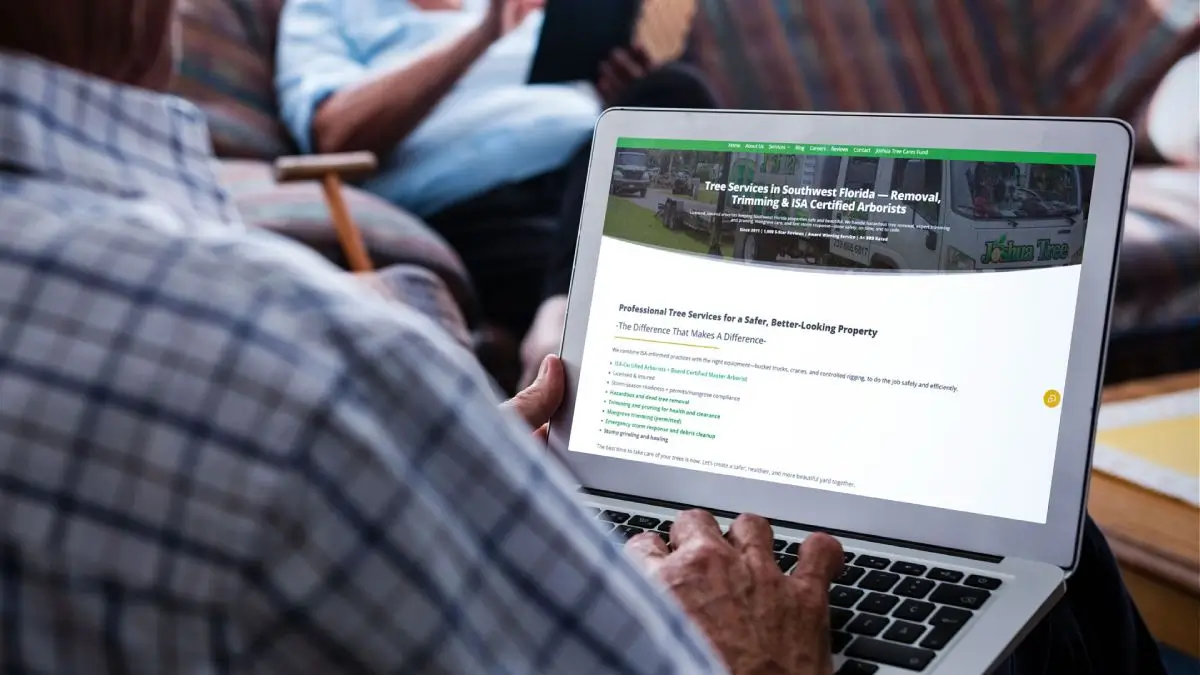
That repositioning is where the educational video series came from: real questions homeowners were already asking, answered by the certified experts who'd know. It cost some short-term search visibility while the rewritten pages re-earned their rankings. It was worth it.
The deeper shift showed up in the economics of social media itself. In the earliest years, paid social spend drove massive year-over-year growth, in some years more than doubling engagement and leads. By the most recent year on record, that same paid growth had flattened to single digits, a sign paid alone was running into diminishing returns.
The response wasn't to spend harder into a flattening channel. It was to stop treating social as the primary lead driver and lean instead into engagement and expertise, pulling an audience in with real domain authority rather than paying to interrupt them. Joshua Tree Inc. started attracting attention instead of buying it.
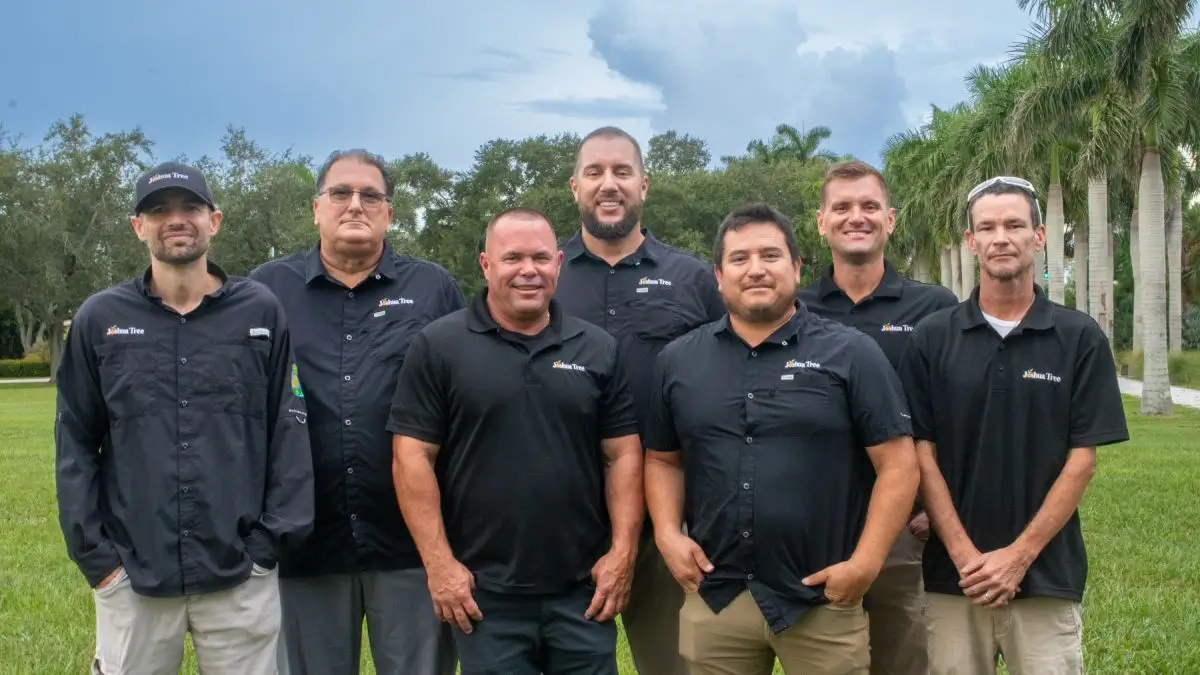
Not long after, impersonators began posing as company employees online, a real threat to a company whose positioning now depended on being recognized as the trusted guide. The response went the other direction entirely: a Meet the Team campaign, putting the real team, sales, arborists, and admin alike, faces and names, in front of the public. Customers started arriving already familiar with who would be knocking on their door.
What changed was not one channel. It was the way a capable business became easier to recognize.
Metric
Result
Five-year total growth
384%
Fort Myers (highest-priority expansion market)
+39% in a single year
Bonita Springs
+76%
Estero (newest market)
+214%, more than tripled
Average job value
+39% (winning on fit, not just volume)
Quote conversion rate
~60% (industry average: 20–40%)
Marketing spend as share of revenue
~half the industry norm, while still hitting the large majority of the year's revenue goal
The five-year sequence.
Recognized the plateau, and chose repositioning over price competition.
Went first-in-market on brand credibility, backed by visible standards.
Bet on new markets before they were proven, funded the bet from its own margin, and held steady through months of silence before it paid off.
Rebuilt the public story around guidance, then around the real people doing the work.
The standard, still in motion
Five years in, still paying attention.
The work hasn't stopped at the five-year mark. Recently, brought in for a large oak removal in downtown Cape Coral, Florida, the team recognized the moment for what it was: they weren't just the ones doing the work, they were the ones best positioned to explain why it was necessary.
People have a connection with trees and nature, and we looked like the messenger of destruction
Rather than let the removal speak for itself, they published a piece grounded in Florida-Friendly Landscaping principles, on how the "wrong tree in the wrong place" was never going to end well. Not a defense. An explanation, offered before anyone had to ask for one.
We pitched the story to local news station producers who picked it up. This allow us to get ahead of the narrative. Backlash didn't stop, people see these trees being removed and we are the back guy, but we replied with respect and helped educate these people in pain from this.
The model itself keeps getting tested, too. What worked to open a market doesn't necessarily keep it open on its own. Five years in, Joshua Tree Inc. isn't finished building. It's still paying attention.
Common questions
Before you start the conversation.
- How long did it take to see results from this shift?
Not immediately, and that’s part of the story. The expansion bet closed at the end of the year, then sat quiet for months, no visible lift in the new markets. During that same quiet stretch, the entire website was rebuilt to match the new positioning, timed to run alongside the ongoing ad investment. By the time the expansion markets started moving, several months later, the two efforts were reinforcing each other.
- Does this approach only work for tree services, or any trade business?
Joshua Tree Inc.’s work is the most fully documented example, but the same sequence, trust before the call, Brand before Demand, Capacity to carry what Demand brings, is already proving out in other trade verticals: screening, electrical, and landscape design and nursery work. The service changes. The sequence doesn’t.
- What would have happened if the expansion bet hadn't worked?
There was a real fallback: redirect that budget back into organic content instead. It didn’t come to that. Later data has only reinforced the original bet, markets that received sustained brand investment kept growing, while the market that stopped investing went flat or slipped. That’s a pattern worth watching, not yet final proof of anything.
- Is this case study typical, or a best-case outcome?
The foundational results, the kind that come from getting Brand right before chasing Demand, are typical, not exceptional. That first phase sets up everything after it. When it works, the business is ready for what comes next. When it doesn’t, the work is to go back and get the foundation right before trying again.
Start with the business you've built
Start with the business you've built.
See how the same sequence, Brand before Demand, Capacity to carry what Demand brings, applies to your trade.
Start the conversationSee how the model applies to your trade